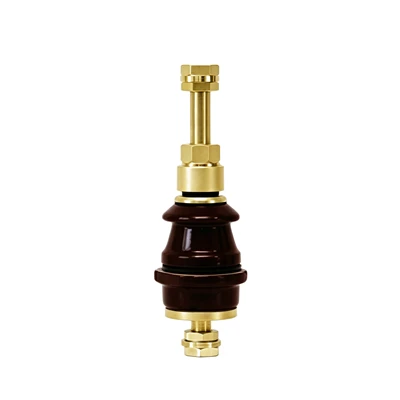
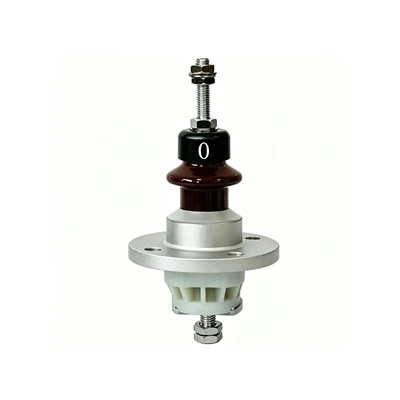
The choice of material for transformer bushings mainly depends on their insulation structure and operating environment. Common materials include ceramics, epoxy resin, fiberglass (FRP), silicone rubber, and polytetrafluoroethylene (PTFE). High-voltage equipment often uses composite insulation structures to improve performance.
Main Types Classified by Main Insulation Material
Porcelain Material (Pure Porcelain Bushing) Used in low-voltage transformers of 10kV and below. The main insulation is a porcelain bushing, with an internal air or simple filling structure. Advantages: low cost and simple structure; disadvantages: fragile, heavy, and unsuitable for harsh outdoor environments.
Oil-Paper Capacitor Structure (Oil-Filled Bushing)
Mostly used in 35kV transformers. It uses alternating rolls of insulating paper and aluminum foil to form the capacitor core, and is impregnated with insulating oil to enhance insulation performance. This structure has good heat dissipation and high electrical strength, but requires regular maintenance of oil level and sealing.
Epoxy Resin Impregnated Fiberglass Core (Dry-type Bushing)
This is a new type of "fiberglass dry-type bushing." The main insulation is made of epoxy resin impregnated fiberglass, featuring a multi-layer capacitor shield design, high insulation strength, and good mechanical stability. The entire structure is solid-molded, requiring no oil filling, and is explosion-proof and leak-proof, widely used in modern dry-type transformers.
Silicone Rubber Sheath + Fiberglass Core Composite Structure
This structure uses silicone rubber as an outer insulating sheath over a fiberglass capacitor core, combining high mechanical strength with excellent dirt resistance and moisture resistance, suitable for high humidity and polluted areas. This lightweight and impact-resistant structure is an ideal replacement for traditional porcelain bushings.
Polytetrafluoroethylene (PTFE, Teflon) Bushing
This bushing is heat-resistant (up to 300℃), corrosion-resistant, and has excellent insulation properties. It is commonly used for local insulation protection in special equipment or high-temperature environments, such as lead wire sheaths. Although not used as a main bushing structure, it is widely used in auxiliary insulation.