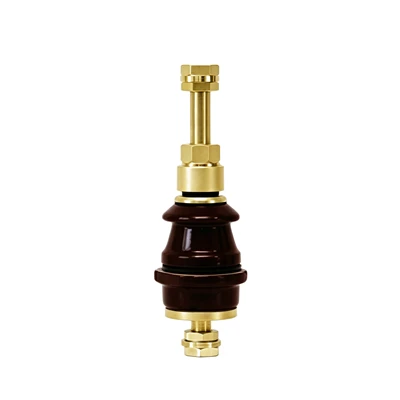
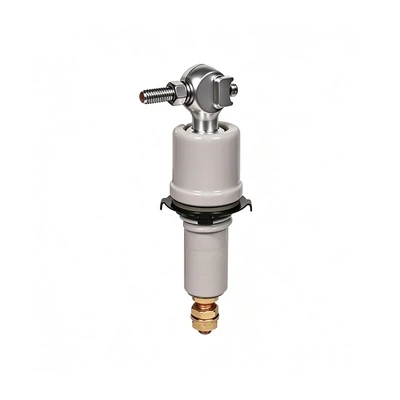
Choosing the right transformer bushing material depends on matching the voltage level, operating environment, maintenance conditions, and safety requirements of the equipment. Generally, silicone rubber composite bushings or epoxy fiberglass dry bushings are preferred due to their excellent insulation performance, mechanical strength, and environmental adaptability, making them particularly suitable for the high reliability and maintenance-free requirements of modern power systems.
Core Selection Principles: Evaluating Material Suitability from Four Dimensions
Voltage Level Determines the Main Insulation Structure
When the rated voltage is greater than 40.5kV, a capacitive structure (such as oil-paper capacitor type or resin-impregnated paper type) should be preferred to achieve uniform electric field distribution and prevent partial discharge.
When the voltage is not higher than 40.5kV, pure porcelain, composite, or capacitive bushings can be selected based on cost and environmental conditions.
Operating Environment Influences External Insulation Material Selection
In highly polluted, coastal, or rainy areas, silicone rubber bushings are recommended as the external insulation material due to their excellent hydrophobicity and anti-flashover capabilities.
In high-altitude areas (>1000m), external insulation creepage distance correction is required. Adjustable composite bushings are recommended, and it is essential to ensure the supplier provides altitude correction certification.
The installation method and current-carrying requirements determine the structural type.
For rated currents less than 630A, a cable-driven structure is recommended for easy on-site installation and replacement.
For rated currents not less than 630A or voltages not less than 220kV, a conductor-driven structure should be selected to ensure current-carrying stability and thermal stability.
The demand for ease of maintenance and safety is driving material upgrades.
Traditional ceramic sleeves, while inexpensive, are fragile, heavy, and pose an explosion risk. They are gradually being replaced by lightweight, impact-resistant composite material sleeves.
Dry sleeves (such as epoxy resin + silicone rubber) do not require oil filling, eliminating the risk of oil leakage. They are suitable for fire-proof and explosion-proof environments and offer superior seismic performance.