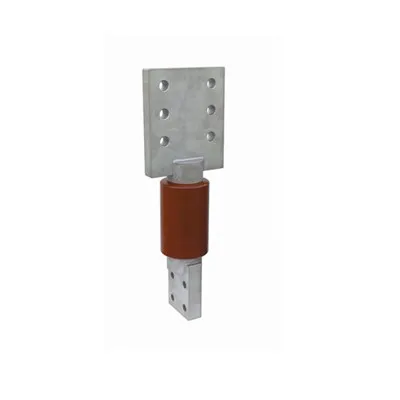
Transformer bushings are critical insulation components in power systems, primarily used to safely lead the high- and low-voltage leads from inside the transformer to the outside of the tank, while simultaneously providing insulation and mechanical fixation to ground. They bear the load current for extended periods and must withstand instantaneous high-current surges under abnormal conditions such as short circuits, thus requiring high reliability.
The basic characteristics of transformer bushings include:
High Electrical Insulation Strength: Bushings must be able to withstand the system's rated voltage and overvoltage surges to prevent flashover or breakdown. Different insulation structures are used for different voltage levels:
40kV and below mostly use pure porcelain bushings, with electrical porcelain as the primary insulation material; 60kV and above commonly use oil-filled bushings or capacitive bushings, utilizing insulating oil or the voltage division principle of capacitors to improve insulation performance; 110kV and above high-voltage systems widely use capacitive bushings, whose core is a capacitor core made of multiple layers of aluminum foil and insulating paper interleaved, achieving a more uniform electric field distribution through voltage equalization and significantly improving withstand voltage.
Sufficient Mechanical Strength: Bushings must secure the leads and withstand mechanical stresses such as external conductor tension, wind load, and earthquakes, especially in high-current applications (e.g., above 800A). Magnetic shielding measures are also necessary to reduce eddy current heating.
Good Thermal Stability: During long-term operation and short-circuit faults, bushings should be able to withstand the heat generated by continuous load current and the high-temperature impact of a short circuit without thermal aging or structural damage.
Excellent Sealing Performance: Bushings connect the inside and outside of the transformer; the oil tank must be sealed to prevent insulating oil leakage and the intrusion of air and moisture, thus avoiding a decline in insulation performance. Modern bushings mostly adopt a fully sealed design and are equipped with an oil conservator to regulate oil volume changes.
Compact Structure and Easy Maintenance: Ideal bushings should be small in size, lightweight, and highly versatile, and equipped with a final grounding device (for testing and operational monitoring). The final grounding device must be reliably grounded to prevent floating potential that could lead to insulation breakdown.
Material and Structural Diversity: Depending on the application scenario, bushings can be made of various materials such as ceramics, epoxy resin-impregnated glass fiber, Teflon, and silicone rubber.