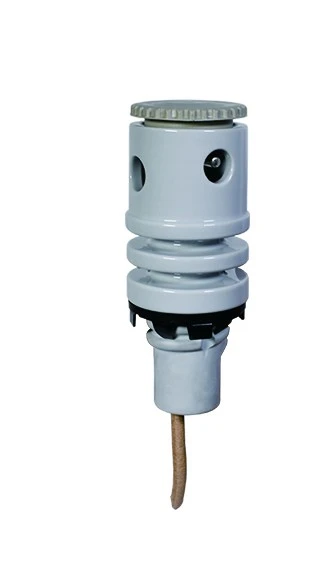
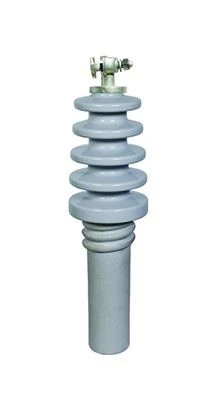
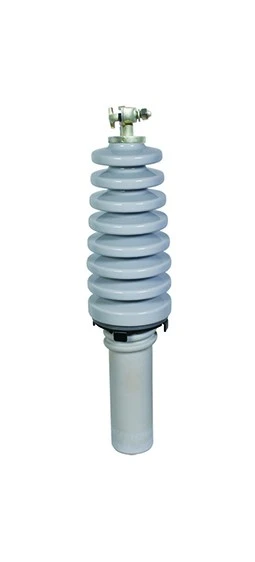
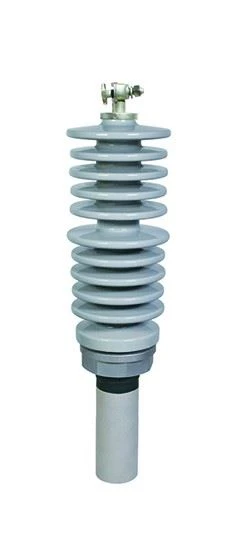
Hebei Anmei Electrical Equipment Co., Ltd. is one of the most reliable manufacturers and suppliers of ansi transformer bushing in China, also supports customized service. If you're going to buy high quality ansi transformer bushing made in China, welcome to get quotation from our factory.
The Evolution of Transformer Bushings
Transformer bushings have been a critical component in power transmission since the dawn of the electrical age. Historically, bushings evolved from simple porcelain insulators to sophisticated engineered components capable of handling ever-increasing voltage and current demands.
The standardization movement began in earnest when utilities recognized the need for interchangeable components. With nearly 50 years of real-life experience with ANSI/IEEE bushing interchangeability standards, utilities in the United States have dramatically reduced their spare bushing inventories, shortened lead times for replacement bushings, and lowered overall costs supporting power transformer reliability.
The introduction of epoxy resin technology in recent decades challenged traditional porcelain designs, offering advantages in manufacturing precision, impact resistance, and design flexibility. Today, the industry continues to evolve with nanotechnology-enhanced materials promising even greater dielectric performance, improved thermal stability, and longer service life. These advanced materials are expected to play a key role in next-generation ANSI transformer bushings for high-voltage and high-reliability applications.
Raw Materials & Technical Construction

Understanding Bushing Materials and Insulation Systems
Porcelain Bushings
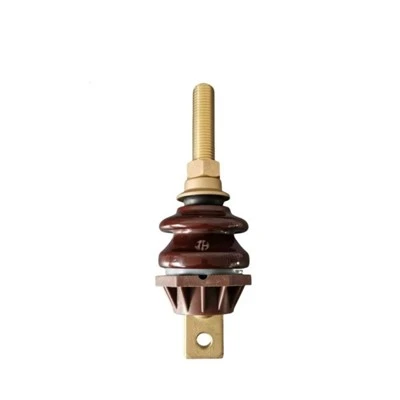
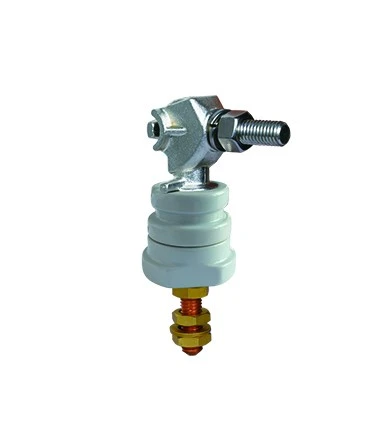
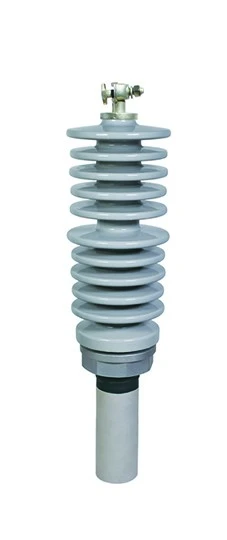
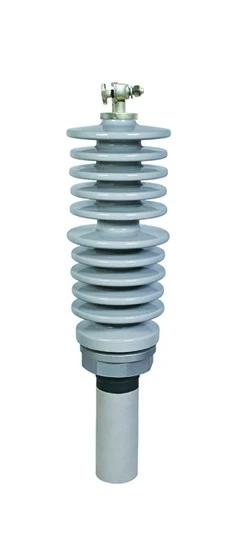
Glazed porcelain remains the traditional choice for ANSI transformer bushings. The ceramic body offers strong anti-pollution, waterproof, and flash-over resistance, effectively preventing breakdown risks during long-term outdoor service. Porcelain bushings are manufactured with glazed porcelain bodies and metal connecting hardware, providing steady insulation performance under harsh power-grid operating environments.
Epoxy Resin Bushings
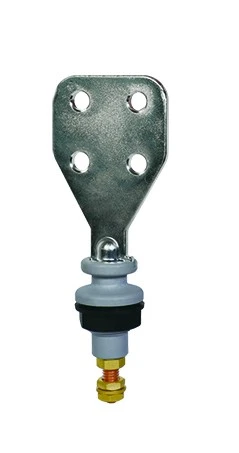
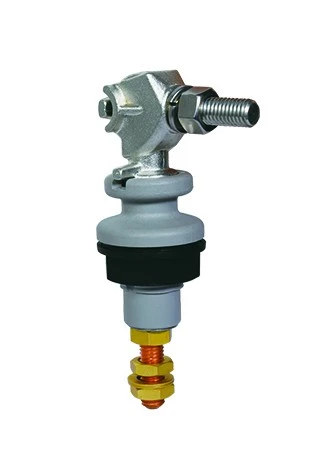
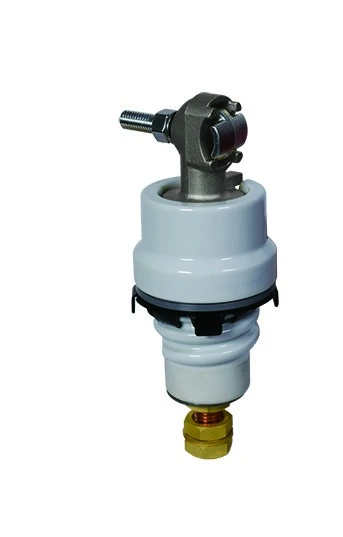
Epoxy resin has emerged as a viable alternative to porcelain, offering superior impact strength and manufacturing tolerances. Modern epoxy formulations incorporate nano-sized fillers such as Al₂O₃ and SiO₂ to enhance dielectric properties, with research demonstrating improved breakdown voltage compared to conventional materials.
The evolution of resin technology has enabled epoxy bushings to achieve thermal expansion coefficients compatible with metal components, preventing separation under thermal cycling. This compatibility significantly reduces the risk of internal voids, micro-cracks, and long-term mechanical failure, ensuring stable dielectric performance throughout the service life of the bushing.

Key Components
- Conductive element: Typically copper, with cross-section determined by rated current
- Insulation body: Porcelain or epoxy resin with optimized creepage distance
- Mounting hardware: Standardized flanges conforming to ANSI/IEEE specifications
ANSI/IEEE Standards for Transformer Bushings
ANSI transformer bushings are manufactured in strict compliance with American National Standards Institute industrial codes. These standards ensure:
Interchangeability – Utilities can replace bushings without custom modifications
Dimensional standardization – Critical for fit and function
Electrical performance – Rated voltage and current classes clearly defined
Interface compatibility – Conforms to ANSI/IEEE Standard 386 for separable connectors
Typical Ratings
Voltage classes: 15kV – 34kV
Current ratings: 250A – 3150A
Creepage distance: Optimized for pollution severity
Ambient temperature range: -45°C to +45°C
Mounting Options
Single-hole and double-hole terminal configurations
Vertical or inclined installation (max 30° from vertical)
Suitable for altitudes up to 1000m (standard) or 2500m (reinforced)
Who Uses ANSI Transformer Bushings?
ANSI standard bushings are essential components across diverse industry sectors:
Primary Users :
- Electric Utilities – Power generation, transmission, and distribution companies
- Industrial Power Facilities – Manufacturing plants with internal substations
- Commercial Buildings – Large structures with backup transformer assemblies
- Mining Operations – Underground and surface mining power systems
- Municipal Power Grids – City and regional electrical infrastructure
Typical Applications
- Single-phase oil-immersed distribution transformers
- Industrial power transformers
- Pad-mounted transformers
- Switchgear and other oil-filled apparatus
End User Industries
- Power equipment manufacturers
- Electrical maintenance crews and contractors
- Power station EPC contractors
- Transformer overhaul and refurbishment specialists
ANSI Transformer Bushing FAQ
1. What voltage classes and current ratings are available for ANSI transformer bushings?
Our ANSI transformer bushings cover voltage classes from 15 kV to 34 kV and current ratings from 250 A to 3,150 A. These ratings are designed to meet typical ANSI/IEEE distribution and power transformer requirements. For special voltage classes or higher current ratings, we offer custom-engineered solutions based on your transformer parameters.
2. Do your ANSI transformer bushings comply with ANSI/IEEE standards?
Yes. Our ANSI transformer bushings are manufactured in strict compliance with ANSI/IEEE standards, including dimensional standardization, interchangeability requirements, and electrical performance classes. The interface dimensions conform to ANSI/IEEE Standard 386 for separable connectors, ensuring direct replacement and compatibility with existing ANSI-style transformer installations.
3. What is the difference between porcelain and epoxy resin ANSI bushings?
Porcelain bushings use a glazed ceramic body that offers strong anti-pollution, waterproof, and flash-over resistance, making them suitable for traditional outdoor applications. Epoxy resin bushings use advanced resin formulations with nano-sized fillers such as Al₂O₃ and SiO₂, offering superior impact strength, tighter manufacturing tolerances, and better design flexibility. The choice depends on your pollution level, mechanical requirements, and installation environment.
4. Can you provide customized ANSI transformer bushings?
Yes. We support customized ANSI transformer bushings, including special voltage classes, current ratings, creepage distances, flange dimensions, terminal configurations, and mounting angles. Our engineering team can develop solutions based on your transformer or switchgear parameters, and we also support OEM/ODM requirements for international projects.
5. What is the lead time for ANSI transformer bushing orders?
For standard models, the lead time is typically 15–30 days after order confirmation. For customized or large-volume orders, the lead time is usually 30–60 days, depending on technical requirements and production scheduling. We will confirm the exact delivery time in the quotation and keep you updated during production.
6. Can you provide test certificates and quality documents?
Yes. Every ANSI transformer bushing is assigned a unique serial number with full traceability. We provide complete test certificates in both English and Chinese, including routine test reports and, where required, type test reports. These documents are suitable for international project documentation, third-party inspection, and customer quality audits.
7. How should ANSI transformer bushings be installed and maintained?
ANSI transformer bushings should be installed according to the approved drawing and torque specifications. The mounting flange must be properly sealed to ensure oil-tight connections in transformer tanks. Vertical or inclined installation is allowed up to 30° from vertical. During operation, routine visual inspection is recommended to check for surface contamination, mechanical damage, or abnormal discharge. Maintenance requirements are minimal compared with traditional oil-impregnated bushings.
8. Can your ANSI transformer bushings be used in high-altitude or heavily polluted environments?
Yes. Our ANSI transformer bushings are available in standard versions suitable for altitudes up to 1,000 m and reinforced versions suitable for altitudes up to 2,500 m. For heavily polluted environments such as coastal areas, industrial zones, or mining sites, we can optimize creepage distance and offer alternative insulation materials to ensure reliable performance under salt fog, cement dust, or chemical pollution.
For technical specifications, custom orders, or OEM inquiries, please contact our sales team. We provide 24-hour sales and technical support for our global customers.
https://www.anmeibushing.com/products
Hot Tags: ansi transformer bushing, China ansi transformer bushing manufacturers, suppliers, factory, transformer cable bushing, transformer current transfer bushing