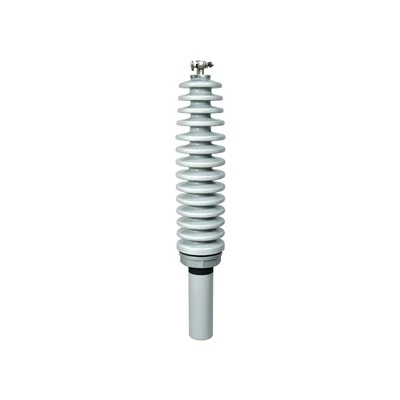
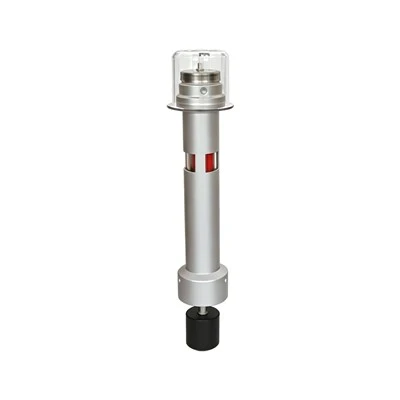
Rated Voltage
The bushing's rated voltage must match or exceed the transformer's maximum system voltage. Voltage class also dictates the bushing construction. For medium voltage (≤36kV), resin-bonded paper (RBP) or cast epoxy bushings are cost-effective and compact. For high voltage (≥72.5kV), capacitance-graded bushings-oil-impregnated paper (OIP) or resin-impregnated paper (RIP)-are required to ensure uniform electric field distribution. Above 220kV, custom OIP or high-grade RIP solutions with tap connections for condition monitoring become standard.

| Voltage Class | Recommended Type | Typical Application |
|---|---|---|
| ≤36kV | RBP / Cast Epoxy | Distribution transformers, compact substations |
| 40–72.5kV | RIP / Small OIP | Industrial and urban grid systems |
| ≥110kV | OIP / High-grade RIP | HV substations, transmission transformers |
| ≥220kV | Custom OIP or RIP with taps | UHV systems, intertie transformers |
Current Rating
The bushing's continuous current rating must exceed the transformer's maximum load current, accounting for ambient temperature and altitude derating. Insufficient current rating leads to excessive terminal heating, accelerated insulation aging, and potential thermal runaway. When specifying, confirm the required current under the actual cooling class and overload scenario, not merely the nominal transformer rating. For high-current applications (e.g., 1250–1600A in compact substations), epoxy bushings with integrated copper conductors and optimized thermal management are preferred.
Mounting Configuration
Mounting interface compatibility is a frequent source of field installation problems. Key parameters include: flange bolt circle diameter (BCD) and hole count, lower end length ("L" dimension) to clear the turret and current transformer opening, lower end diameter ("Dmax"), and whether the connection is draw-lead or bottom-connected. For replacement projects, always match the existing turret geometry before considering electrical upgrades. Additionally, verify the permissible mounting angle-OIP bushings typically require vertical or near-vertical installation, while RIP bushings offer greater flexibility.

Insulation Material
The insulation system determines maintenance requirements, leakage risk, and service life. The two dominant technologies are OIP and RIP.

OIP (Oil-Impregnated Paper)
OIP bushings use paper insulation impregnated with transformer-grade mineral oil, sealed within a porcelain or composite housing. They offer proven reliability and lower initial cost, but require periodic oil sampling and DGA testing. Oil leakage and moisture ingress are the primary aging mechanisms. A well-maintained OIP bushing can last 20–25 years.
RIP (Resin-Impregnated Paper)
RIP bushings replace oil with epoxy resin impregnated under vacuum, creating a solid, dry dielectric with no free oil. Advantages include maintenance-free operation, eliminated oil leakage risk, better moisture tolerance during storage, and longer design life (50+ years). The trade-off is higher upfront cost and greater sensitivity to mechanical damage during handling.

For porcelain versus silicone housing: porcelain remains the benchmark for long-term outdoor tracking resistance, while silicone rubber offers superior hydrophobicity in heavy pollution and reduced weight. Composite (silicone) housings are increasingly specified for coastal, industrial, and high-vibration environments.
Indoor/Outdoor Environment
Environmental conditions directly affect external insulation design. For outdoor installations, creepage distance must be sized according to the site's pollution severity class (per IEC 60815). Coastal salt spray, industrial emissions, and high-humidity conditions require extended creepage and hydrophobic housing materials. For indoor installations (switchgear, enclosure-mounted), standard creepage may suffice, but fire safety and oil leakage containment become primary concerns-dry-type RIP or cast epoxy bushings are preferred in enclosed spaces
When preparing an RFQ, describe the actual contamination source (e.g., "coastal salt spray, 500m from shoreline" or "cement plant dust") rather than simply labeling the site as "polluted." This allows the supplier to recommend the correct external profile.
Transformer Type
Different transformer applications impose distinct constraints on bushing selection.
Oil-immersed distribution transformers
Typically ≤36kV, these transformers favor cost-effective RBP or cast epoxy bushings. The bushing must be compatible with the transformer oil system and sealing interface. For pole-mounted units, compact dimensions and UV-resistant housings are essential.
Power transformers (substation)
For ≥72.5kV, the choice between OIP and RIP hinges on maintenance philosophy and life-cycle cost. Utilities with oil testing capability may prefer OIP for lower initial cost; those prioritizing maintenance-free operation and leakage elimination increasingly specify RIP. Note that RIP bushings are now offered as standard on many new transformer models.
GIS-connected or compact substations
RIP bushings are strongly preferred due to their low partial discharge (≤5pC) performance and oil-free construction, which aligns with the safety and space constraints of GIS and enclosed installations.
Replacement/retrofit projects
Match the existing mounting geometry first, then upgrade insulation technology if beneficial. Siemens and other major suppliers offer drop-in replacements for legacy bushing brands with adapter solutions for draw-lead configurations.
Selection Checklist for RFQ
Before contacting a supplier, compile the following information to ensure an accurate and comparable quotation:
System voltage and BIL (basic impulse level)
Continuous current rating and overload requirement
Mounting orientation and flange dimensions
Pollution severity class and site altitude
Insulation preference (OIP vs. RIP, porcelain vs. composite)
Applicable standards (IEC 60137, IEEE C57.19, or national)
Transformer type and cooling class
Product reference for your website :When specifying medium-voltage bushings for distribution transformers or compact substations, PUTAI Electric's epoxy RIP wall bushings (12kV–35kV) offer low partial discharge (≤5pC), IP67/IP68 sealing options, and customizable mounting interfaces suitable for both indoor and outdoor applications. High-voltage OIP and RIP bushings are available for power transformer applications up to 800kV per IEEE/IEC standards.