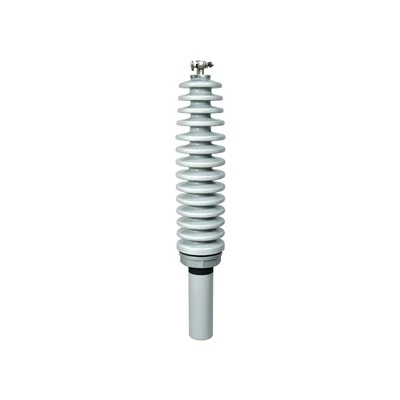
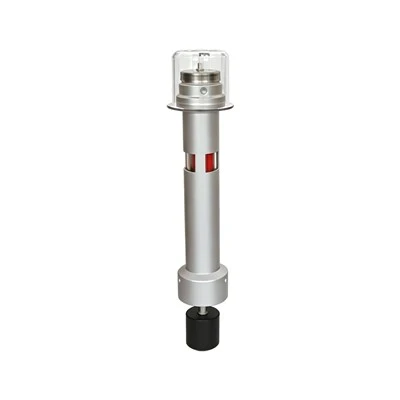
When specifying bushings for distribution or power transformers, the choice between epoxy resin and porcelain insulation involves trade-offs across dielectric design, mechanical robustness, installation efficiency, and lifecycle cost. Neither material is universally superior; the appropriate selection depends on voltage class, environmental exposure, maintenance philosophy, and transformer type. The following comparison examines the objective technical differences to support informed specification decisions.
Insulation Material & Dielectric Design
Porcelain Bushings use a hollow porcelain body with a separate conductor passed through the central cavity. The primary insulation between the conductor and the porcelain inner wall is air, sometimes supplemented by oil in liquid-immersed designs. This configuration creates an air gap that concentrates the electric field between conductor and porcelain body, which can lead to partial discharge activity under voltage transients such as harmonics or switching surges. The porcelain body itself provides excellent long-term tracking resistance under pollution, but the multi-component assembly introduces interfaces that require sealing against moisture ingress.

Epoxy Bushings are cast as a single solid piece with the conductor integrally embedded in the epoxy body. No air gap exists within the insulation cross-section; the electric field distributes uniformly across the epoxy dielectric. This homogeneous field distribution improves performance during electrical transients and reduces partial discharge risk. The one-piece cast construction eliminates gasketed terminal assemblies, limiting potential leak paths to the flange-to-tank interface and the conductor-to-epoxy interface.
For medium-voltage distribution applications (up to 42 kV), cast epoxy bushings are widely available in non-condenser designs with standardized plug-in interfaces per EN 50181. Porcelain remains the dominant technology for higher voltage classes where oil-impregnated paper (OIP) or resin-impregnated paper (RIP) condenser bushings are required, though epoxy-impregnated paper dry bushings are increasingly specified for high-voltage applications where explosion resistance is a concern.

Weight & Footprint
Epoxy resin has a lower density than porcelain, and the one-piece cast design eliminates the separate hardware and sealing components required for porcelain assemblies. The result is a bushing that is lighter and more compact for the same voltage and current rating. This weight reduction simplifies handling during shipping and installation, and reduces mechanical load on the transformer tank and mounting flange.

The compact footprint of epoxy bushings also enables optimization of tank designs and oil volume reduction, particularly in single-phase distribution transformers where the active part is not the limiting factor. For retrofit applications where space is constrained, the smaller envelope of epoxy bushings can be advantageous.
Porcelain bushings, being hollow with separate conductors, require greater creepage distance and larger shed profiles, particularly at higher voltage classes. In UHV applications, porcelain insulators for electrical equipment can have height and diameter more than twice those of 500 kV bushings.
Mechanical Strength & Durability
Porcelain is a brittle ceramic material. Its fragility creates risks during shipping, handling, and installation, and field reports indicate concerns regarding mechanical performance under these conditions. Once installed, porcelain bushings are susceptible to damage from vandalism and external impact. In extreme failure modes, porcelain bushings can rupture explosively, a hazard that has driven replacement programs for high-voltage oil-filled bushings in some regions.
Epoxy formulations for electrical applications have evolved significantly, with cycloaliphatic epoxy systems offering high mechanical resilience. The cast epoxy body is more durable than porcelain and can withstand rougher handling through shipping and installation. This robustness also provides improved resistance to vandalism where equipment hardening is a concern. The one-piece construction with no assembly eliminates failure points associated with improper assembly or field manipulation.
Weather Resistance & Environmental Performance
Both materials can perform well outdoors, but their failure mechanisms differ. Porcelain is inherently hydrophobic when clean but can develop surface tracking under heavy pollution if not adequately maintained or coated. In DC yards and polluted environments, porcelain bushings often require RTV coatings or composite envelopes to ensure uniform moisture distribution and maintain creepage performance.
Cycloaliphatic epoxy used in modern bushings provides excellent hydrophobic and surface-tracking characteristics. Inclined plane tracking tests per ASTM D2303 yield ratings exceeding 900 minutes at 3.5 kV for typical epoxy formulations, indicating robust performance under contaminated conditions. The material also carries a UL 94 V-0 flammability rating, which is relevant for installations where fire safety is a consideration.
It should be noted that epoxy formulations vary, and not all epoxy bushings are formulated for outdoor exposure. Standard epoxy resin bushings are typically specified for indoor installations or selected outdoor applications with protective connectors. Specifiers should verify the specific formulation's UV stability and tracking resistance for the intended environment.

Installation & Maintenance
Porcelain bushings require assembly of the conductor, sealing gaskets, and porcelain body at the factory or in the field. The interface between conductor and porcelain must be properly sealed to prevent oil leakage or moisture ingress. Over time, gaskets can age and crack, losing sealing effectiveness and leading to oil leaks-a significant concern, as industry surveys indicate that 86% of surveyed utilities have concerns regarding distribution transformer quality, with leaks being a notable issue.
Epoxy bushings are cast as a single piece with the conductor integrally embedded, eliminating field assembly and reducing installation labor. The mounting nut design simplifies installation, and the absence of gasketed terminal assemblies removes leak paths associated with improper assembly or damaged seals. For retrofit projects, epoxy bushings with standardized interfaces can serve as drop-in replacements for aged porcelain bushings without modifying the transformer arrangement.
Storage and logistics also favor epoxy: the lighter weight and resistance to breakage simplify warehouse handling and reduce inventory losses due to accidental damage.
Application Scenarios
Epoxy Bushings are most commonly specified for:
- Low and medium voltage distribution transformers (typically up to 42 kV)
- Pole-type distribution transformers where compact size and leak minimization are priorities
- Dry-type transformers and switchgear requiring solid insulation
- Installations where vandalism resistance or reduced weight is important
- Retrofit projects replacing aged porcelain bushings with minimal modification
Porcelain Bushings remain preferred for:
- High-voltage and ultra-high-voltage power transformers where condenser grading (OIP or RIP) is required
- Applications with proven service history spanning decades, where utilities have established maintenance procedures and spares inventory
- Environments where the specific porcelain formulation has demonstrated long-term performance and epoxy alternatives have not been qualified
- Situations where the higher weight and fragility are acceptable given the voltage class and installation conditions
Selection Guidance: For distribution transformers up to 42 kV where leakage prevention, installation efficiency, and handling durability are priorities, epoxy bushings offer measurable advantages. For high-voltage power transformers where condenser grading is required and service history is paramount, porcelain (or alternative condenser technologies such as RIP/OIP with porcelain or composite envelopes) remains the appropriate choice. The decision should be based on voltage class, environmental conditions, maintenance capabilities, and total lifecycle cost rather than a blanket preference for either material.