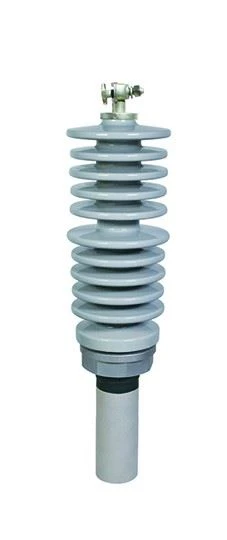
As a critical connection and insulation component in power systems, transformer bushings offer core advantages in electrical safety, mechanical stability, thermal stability, and environmental adaptability. They not only ensure a reliable connection between the transformer's internal windings and the external power grid but also maintain long-term system stability under complex operating conditions.
Core Functional Advantages
High-Efficiency Insulation and Isolation
As the primary insulation barrier when high-voltage conductors pass through the grounding tank, bushings effectively prevent current leakage and ensure sufficient insulation strength between energized parts and ground.
Adopting a capacitance-graded design (such as aluminum foil electrodes) ensures uniform electric field distribution, improving withstand voltage and making it suitable for high voltage levels from 66kV to 800kV.
Reliable Electrical Connection
As a conductive channel between the transformer's internal winding leads and external transmission lines, bushings possess low resistance and high conductivity, ensuring efficient power transmission.
Supports high current transmission (rated current up to 12kA and above), meeting the requirements of heavy-load conditions.
Excellent Mechanical Support Capability
Capable of withstanding conductor tension, wind load, seismic force, and operational stress, ensuring secure lead wire fixation and preventing swaying or damage.
Some designs employ a high-strength spring fastening structure to compensate for thermal expansion and contraction caused by temperature changes, improving connection reliability.
Good Sealing Performance
Achieves complete isolation between the transformer's internal insulating oil and the external environment, preventing oil leakage and the intrusion of moisture and air, extending equipment life.
Dry bushings (such as epoxy resin impregnated paper type) feature an oil-free design, eliminating the risk of oil leakage and making them suitable for urban substations, underground facilities, and other locations with high fire protection requirements.